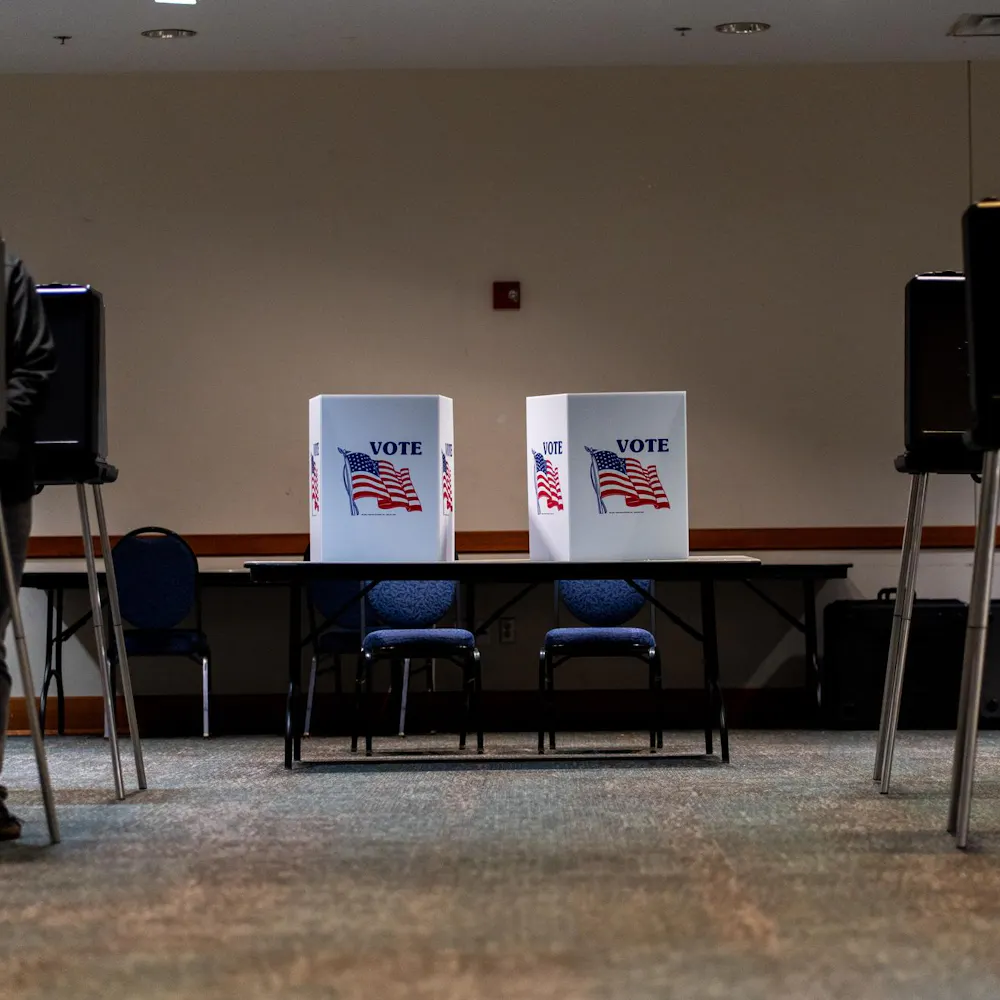
Proposal 2 had no chance of passing, despite some polls that showed the contrary, and voters lied in pre-election surveys to escape being "shamed and called racist, bigots and prejudiced," said one political analyst at a post-election discussion on Friday.
The election wrap-up event at Kellogg Center featured three panels of pollsters, analysts and campaign representatives who discussed events leading up to the election. About 200 people came to the event hosted by the Michigan Political History Society and MSU's Michigan Political Leadership Program.
Although media-commissioned polls indicated Proposal 2's defeat, the initiative was bound to pass, said Bill Ballenger, editor and publisher of Inside Michigan Politics.
"There's no question people being polled — they've gone underground," Ballenger said. "They were lying to pollsters; they were lying to everybody."
An exit poll by EPIC-MRA, a Lansing-based polling firm, showed that 54 percent of 601 voters said they voted for the proposal. The poll had an error of plus or minus 4 percentage points. Michigan's Department of State shows the ballot proposal passed by about 58 percent of the votes.
Proposal 2 didn't get support from demographics that would have made a difference, said pollster Steve Mitchell, chairman of Mitchell Research & Communications Inc.
"The only way that was going to be defeated is if there was strong opposition among three groups: Democrats, women and labor union households," he said.
Other political analysts say polling numbers showed Gov. Jennifer Granholm was assured victory while Republican challenger Dick DeVos was bleeding supporters with inadequate campaign strategies.
Mitchell said DeVos needed to spend time correcting Granholm's allegations about his former company, Amway Corp., which she said moved jobs from Michigan to China.
Representatives from the Michigan gubernatorial campaigns and the U.S. senatorial campaigns — a race between Sen. Debbie Stabenow and Republican challenger Mike Bouchard — said candidates needed to get out their messages and background information earlier in the campaigning.
Since day one, Granholm was able to communicate well with the voters, campaign spokesman Chris De Witt said.
"She was able to get her message out and show people she cared," he said. "In the last debate, there was a question that came up from the audience about how do you feel on a certain issue, but the governor went and asked 'tell me about your family' or 'tell me what's going on,' showing a level of concern that he was not able to do."
DeVos never broke 43 percent approval among potential voters, said Ed Sarpolus, vice president of EPIC-MRA.
Part of DeVos' problem was his affiliation with Amway, Sarpolus said. About 40 percent of those polled in October said the businessman's former status as CEO of the company was a reason not to vote for him.
Another obstacle for DeVos was very few people knew any personal information about him until late in the campaign, Sarpolus said.
"Dick DeVos was introduced but never defined," he said. "In October, people still couldn't tell us what Dick DeVos was all about, what his vision for the state was."