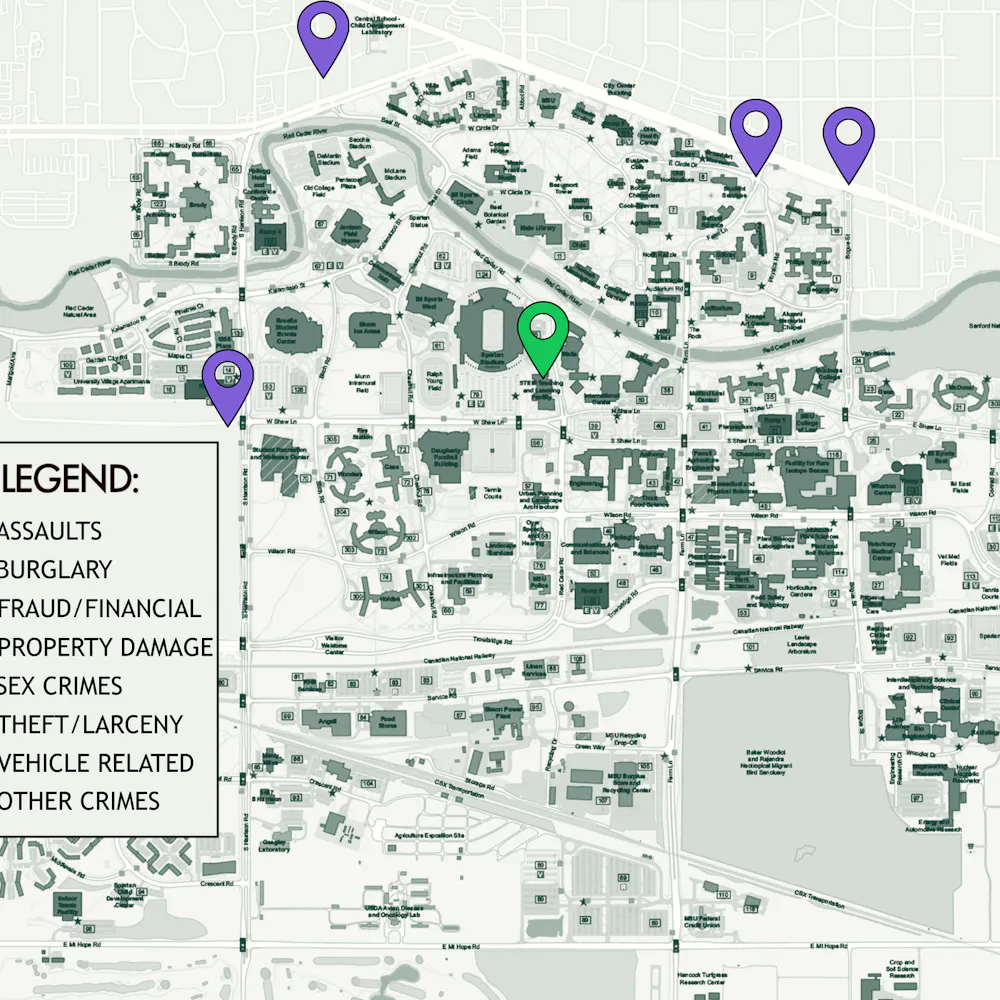
As spring break approaches, city officials say home invasions are on the rise and offer safety tips for students.
“There (are) more break-ins over Christmas break and spring break,” East Lansing Police Capt. Kim Johnson said.
As spring break approaches, city officials say home invasions are on the rise and offer safety tips for students.
“There (are) more break-ins over Christmas break and spring break,” East Lansing Police Capt. Kim Johnson said.
The most common home invasions occur in student areas, Johnson said.
Break-ins don’t increase at any certain time of the year, but rise when students leave for break, he said.
Newspapers or mail that hasn’t been collected can be inviting to a thief, Johnson said.
“People don’t stop the mail or shovel the sidewalk while they’re gone,” he said.
Biomedical laboratory diagnostics junior and Haslett Arms, 1024 Waters Edge Drive, resident Kaelin Avedisian said he makes no extra effort to secure his apartment beyond locking doors and windows.
“We were notified when there were some recent break-ins, but we just keep things locked.” Avedisian said. “It’s nothing new to us.”
Apartment owners take extra steps to encourage students to take proper security measures to protect their homes, although not all residents follow landowners’ suggestions.
“We do during the break times send out a newsletter,” said Wayne Hiner, supervisor of Community Resources Management Co.
The letter encourages students to take extra safety measures while away from home, which include making sure windows are locked and having friends stop by the house, Hiner said.
“I’d say less than half actually follow the safety precautions,” Hiner said.
Brian Hagan, agent of Hagan Realty Inc., said he has seen the same pattern of students neglecting proper safety precautions.
“We send a letter around break time reminding residents this time of year is one of those times when there’s break-ins,” Hagan said.
Many students in off-campus housing neglect to turn on a porch light or lock the dead bolt, making it easier for intruders, Hagan said.
For microbiology junior Meghan Hodges, there is no need for increased safety measures.
“We can’t lock our windows,” Hodges said.
“I’ve gotten an e-mail (suggesting safety precautions), but I didn’t read it.”
Chemical engineering junior Chelsea McCord locks up to prevent break-ins.
“(The newsletter) usually says to just lock stuff up and we do that,” the Haslett Arms resident said.
Support student media! Please consider donating to The State News and help fund the future of journalism.
“We lock the door and chain it.”
To reduce the possibility of home invasions, Johnson offers three ways to keep thieves out.
“The first is to pay attention to people who are strange in the area,” Johnson said.
“Always lock doors and windows (and) sliding glass doors even on the second or third floors. … Make sure you know the people at the parties.”
Johnson said the most common robbery is of electronics, which can occur at parties when the host is unfamiliar with guests.
Perpetrators are most commonly caught when a neighbor witnesses the crime and reports it to the police, he said.
Looking out for suspicious behavior can help reduce crime, Johnson said.
“It’s rare for us to catch someone just walking down the street,” he said.