When Jill Jablonski walked into the Union Ballroom to attend the Tunnel of Oppression event, she didn’t know what to think — but she didn’t expect the experience to alter her perceptions of herself.
Jablonski, a comparative cultures and politics sophomore, had a general understanding of what oppression meant, but after walking through the several scenes depicting things including sex
trafficking, rape, racial profiling, economic status and issues specifically tied to a college community, she felt differently.
“It was — it kind of brought to light a few things that you wouldn’t think of as oppression,” she said. “It made you think about it.”
MSU student actors, the University Activities Board and Amnesty International placed participants directly into discriminatory or obscene circumstances through a series of skits for a comprehensive understanding of oppressive behaviors, said Zain Shamoon, a graduate student and lead coordinator of the event.
“What (the purpose of the event) is the idea (of) putting people into an experience of the world that doesn’t get enough attention,” he said.
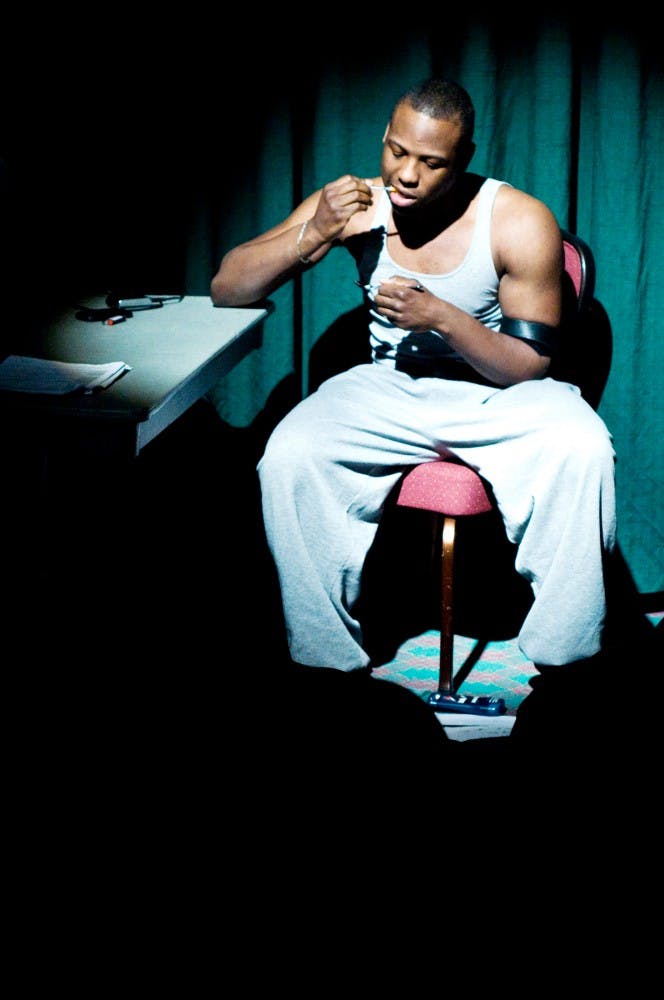
The event is an eye-opening experience to issues people might not know about and care to ignore, said Dywaine Betts Jr., an employee with the MSU Gear Up College Day Programs and acted in the role as a drug addict.
“I decided to do a play like this because it was something very powerful,” he said. “Each (segment of the tunnel) — it tugs at the heart strings for some and leaves others more educated, and I just wanted to be a part of that.”
Other actors, such as Myra McPhee, a complex director of Owen and Van Hoosen halls, hoped the experience would ignite a change within
peoples’ perspectives and create an opportunity for students to interact differently toward others worldwide.
“I think it’s important because it allows students to get one experience where they can see oppression and backgrounds from people all over the world, back to back,” she said. “You don’t have to search and wait for opportunity to come up, they can come over to the tunnel and really see a worldwide perspective in one place.”
Although a dramatic interpretation, the event presents true human complexity that often is reflected in media as well as how a society can portray topics such as body image or discrimination in a negative way, Shamoon said.
“People can change the channel, and say it’s not me, this is in Japan,” he said. “Or people could put down the newspaper when they find out about starving in Darfur, but if you have a show that makes people actually interact with the oppression, you can’t just put it down and change the channel, you’re sitting there interacting with it.”
Jablonski felt moved by the performance, especially the segments dedicated to body image.
“It is such a common conception to be just like, ‘Help your self-esteem,’ and it’s not,” she said. “It is changing culture, and you need to change cultural thought before anything else changes.”
Support student media!
Please consider donating to The State News and help fund the future of journalism.
Discussion
Share and discuss “Event focuses on issues of oppression” on social media.