With winter approaching, temperatures are dropping, and germs are on the prowl. Before you spend your days in bed with a clogged nose and wheezing cough, check out these tips on how to stay healthy this season.
Hands off
With winter approaching, temperatures are dropping, and germs are on the prowl. Before you spend your days in bed with a clogged nose and wheezing cough, check out these tips on how to stay healthy this season.
Hands off
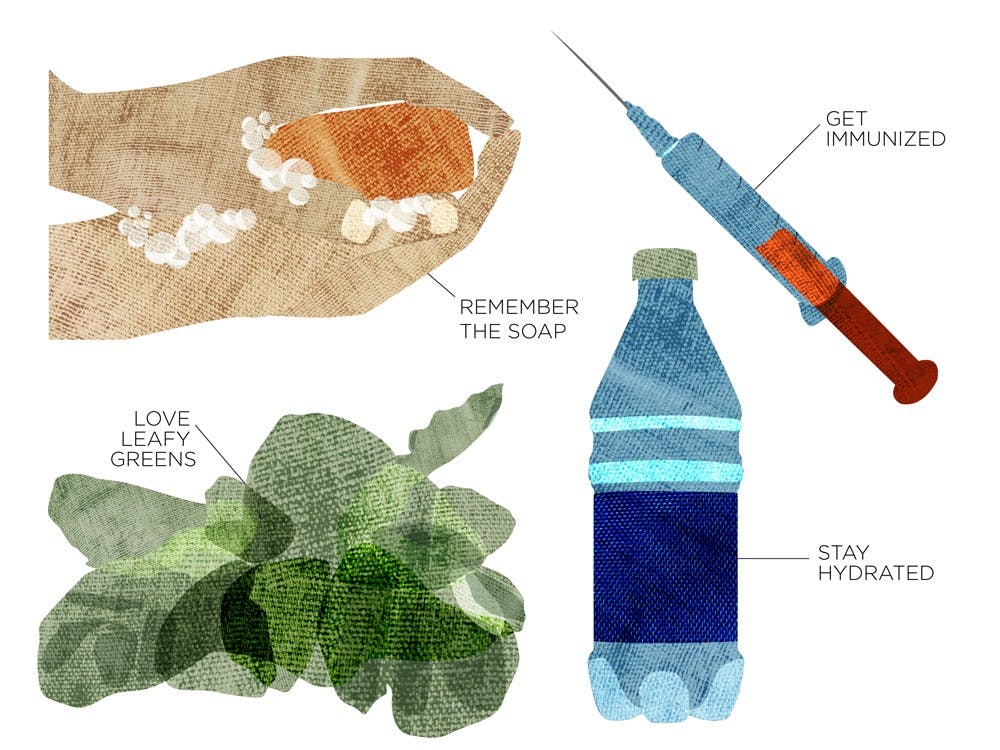
The spread of germs is related directly to hygiene. Regularly washing your hands is always a good technique to prevent yourself from getting sick, but it’s important to know at what time of day you should wash your hands to stay healthy. It is essential to sanitize your hands before a number of activities, including preparing or handling food, treating a wound or open sore and touching contact lenses. Students also should remember to wash their hands after coughing or sneezing, using the lavatories, touching animals or food and caring for someone who is sick.
The art of washing your hands
To properly wash your hands, after wetting your hands with warm running water and applying soap, rub your hands together forcefully for at least 25 seconds. Many suggest washing your hands for the duration of time it takes to sing “Happy Birthday.” Be sure to cover all surfaces, washing between your fingers and under nails. After washing your hands, use a towel to turn the water off to prevent yourself from collecting the same germs you had on your hands when you turned the faucet on. Another major source of bacteria is the handle of a toilet, so try flushing with your foot to avoid coming in direct contact with the germs.
You are what you eat
It’s always a good idea to consume plenty of vitamins and nutrients, but during a season so fraught with potential illnesses, eating well becomes crucial. Three servings of vegetables and two servings of fresh fruit each day will give your body the stamina it needs to pull you through the snow day after day. For those who are not lactose intolerant, two servings of milk or yogurt per day enforces your body’s calcium, a nutrient vital in keeping you strong. Suggested meals to stay healthy include hot soup, as well as slow-cooked, warm meals, such as meatloaf and anything cooked in a crock pot. More specific ingredient recommendations are foods containing garlic, oregano, dark leafy greens, cumin, berries and cinnamon, which all keep digestion lively. And because they are antibacterial, these foods help to boost your immune system.
Quality H2O
Water nourishes each cell in your body and is essential to staying healthy. When the body has a lack of water, it increases mucus production to limit the amount of water it loses, creating the “runny nose” symptom usually accompanying the common cold. Increasing your daily intake of water can keep your body functioning in tip-top shape. Another way of conserving water in your body is using a humidifier to ensure the air you are breathing is moist.
Less stress, more sleep
On average, most individuals require six to eight hours of sleep each night. Staying up very late and waking up early is all right when it’s necessary to complete the occasional procrastinated term paper, but students who regularly lack proper amounts of sleep are more susceptible to contracting an illness. Although cramming for that test in one night might pay off in the short term, students will find establishing a consistent bedtime routine — going to sleep at the same time each night — to be more beneficial in the long run.
Too much stress can break your body down, so keep the pressure to a minimum by exercising, taking a bubble bath, spending time with family and friends or engaging in other relaxing activities.
Care for your skin
During the winter months, there is a dramatic decrease in the percentage of moisture in the air, often causing dry skin and irritation. As you move from the warmth of the indoors to the frigid cold of the outdoors, your body is affected by consistent dramatic temperature changes. Switching from regular lotions to a stronger natural moisturizer can prevent your skin from feeling tighter, keeping it hydrated and healthy this season. Examples of effective moisturizers include cocoa butter and natural soy lotion.
Fight with a flu shot
Besides the many at-home precautions you can take to prevent yourself from catching a cold, there is a clinical option to prevent sickness — receiving an immunization shot. Students can arrange appointments with local doctors or medical offices in their hometowns, but several locations near campus offer the shots as well, including Rite Aid, 1399 E. Grand River Ave., and Walgreens, 3425 E. Saginaw St., in Lansing. At both of these stores, you also can check out multi-vitamins and echinacea pills, which many believe provide nutrients to help fight against the common cold.
Source: simplemom.net
Support student media! Please consider donating to The State News and help fund the future of journalism.



